Mostrando entradas con la etiqueta CLIL. Mostrar todas las entradas

jueves, 25 de mayo de 2017

Reflexiones sobre un Proyecto Bilingüe

En el IES de Candás están iniciando una interesante andadura con su Proyecto Bilingüe. Tras dar el primer paso y conseguir la implicación del profesorado para echar a andar la iniciativa, tanto de inglés como de áreas no lingüísticas, ahora se plantean ir más allá y trabajar en el proyecto de forma coordinada. Por eso, cuando desde el CPR de Gijón-Oriente se han puesto en contacto con nosotros para ayudarles en ese proceso, tanto mi compañero André Castillón como yo no lo dudamos y hemos colaborado, en la medida de lo posible, con el Grupo de Trabajo que han creado al efecto.

Durante la tarde de ayer tuve la oportunidad de acudir a su instituto para mostrarles algunos de los proyectos que, durante los últimos años, hemos realizado en el Centro dentro del Proyecto Bilingüe (Opera Project, Timeline Project, Portfolio digital, ...) y, también, para hablar de aplicaciones que pueden ser utilizadas, tanto para plantear proyectos colaborativos entre distintas áreas como para trabajar la competencia digital del alumnado (al mismo tiempo que se puede desarrollar, por ejemplo, la competencia lingüística en una lengua extranjera, tanto oral como escrita) [para realizar la presentación me he ayudado de este Genial.ly]

A través de ejemplos prácticos y reales -la mayoría creados por mi alumnado- hubo tiempo para mostrar algunas de mis aplicaciones favoritas: EdPuzzle, EducaPlay, Genial.ly, Glogster, Padlet, Pixton, Powtoon, Quizlet, Storybird, Symbaloo, Thinglink, Tiki-toki, Voicethread, Voki, Wix... y, evidentemente, también hubo tiempo para hablar de eTwinning.

Básicamente, la idea que he querido transmitir durante la sesión es la de que trabajando juntos y de forma coordinada, planteando tareas claras (y utilizando rúbricas de evaluación) y pidiendo al alumnado que desarrolle productos digitales, la repercusión en el aprendizaje es exponencialmente superior a la que puede conseguir un docente trabajando en solitario en sus sesiones semanales.

Por lo que me han comentado, al finalizar la sesión, fue una tarde productiva que les ha aportado muchas ideas y les ha abierto posibles líneas de trabajo. Espero que así sea y poder disfrutar de los productos digitales elaborados por su alumnado.

sábado, 24 de septiembre de 2016

One bite at a time

Una de los hilos que no pueden faltar en el foro "Cafetería" de los cursos INTEF es el de sugerencias musicales y tengo por costumbre escuchar las canciones que otr@s proponen.
Sara Noain, maestra de inglés en un colegio de Logroño, sugería en el foro del curso #REAaicle_INTEF la canción Hall of fame del grupo irlandés The Script. Me gustó la canción, la música y el mensaje que esconde en su letra y, como también me gustó el vídeo, me pareció que sería una magnífica forma de empezar el año con mi alumnado.
Decidí plantear la actividad en 2º ESO porque ya nos conocemos del curso pasado (como suelo decirle a mi alumnado del Proyecto Bilingüe, el mes de septiembre de 2º ESO supone el comienzo del cuarto trimestre de la materia) y no parece necesario invertir tiempo en presentaciones.
Se trataba, pues, de crear un clima de trabajo adecuado, enviando un mensaje positivo y, a la vez, haciéndoles conscientes de que cualquier objetivo, por grande que sea, puede lograrse con esfuerzo, ilusión y dedicación.


¿Cómo te sientes hoy? fue la pregunta con la que comenzamos la sesión. Tras hablar de las sensaciones y emociones del primer día de instituto (cansad@, aburrid@, hambrient@, en algún caso, ilusionad@, ...) pasamos a identificar lo que distintos emoticones nos transmitían.
El paso siguiente fue entregarles la silueta de un personaje para que, mientras escuchaban un fragmento de música (en este caso, la canción Hall of fame), representaran en él lo que esa música les hacía sentir.
Por último, tras comentar la canción y lo que la letra y el vídeo les quería transmitir, les pedí que escribieran su objetivo a corto, medio y/o largo plazo.
En los siguientes vídeos podéis ver el proceso y el resultado de su trabajo: (por cierto, mi reencuentro con Animoto se lo agradezco a Marta Roldán -profesora en el IES Escultor Juan de Villanueva- que utilizó esta aplicación para su presentación en el curso #REAaicle_INTEF)


lunes, 18 de enero de 2016

Guido of Arezzo

I asked my 2 ESO students to search for information about Guido of Arezzo and to create a short biography of this Music theorist of the Middle Ages. Most of them just presented a traditional written biography but three of them decided to try something different. Antonio created a Voki, Sara recorded her voice and sent the audio file to me, and Erica created this amazing Powtoon.

https://www.powtoon.com/online-presentation/eM4OEFCyTNZ/guido-of-arezzo/

I do love the experience of being amazed by them.

lunes, 11 de enero de 2016

Music genre

We have used this vocabulary activity to introduce the concept of Music Genre.


Here you have the document we used for the activity

I have created this Quizlet in order them to review the vocabulary worked on this unit

https://quizlet.com/_1vztxy

Once they were able to use the vocabulary properly, it was time to start playing with this blubbr

domingo, 8 de noviembre de 2015

Y otra aplicación para la flipped classroom

Esta lección será de utilidad para mi alumnado de 1º ESO (bilingüe), con el fin de conocer el funcionamiento del oído y las distintas partes que lo integran.
Ha sido creada utilizando una nueva aplicación, EDpuzzle

El vídeo original ha sido tomado del canal de youtube de Miracle-Ear

miércoles, 4 de noviembre de 2015

A new application: Blubbr

Blubbr is an application that allows you to create quizzes from youtube videos.  It gives lots of possibilities for my music lessons.
My 2ESO students have been learning about music genres and I've created this triv in order them to review the concepts and the vocabulary related to the topic.
Do you feel like trying?

martes, 3 de noviembre de 2015

History in mind, an eTwinning Learning Event

I've just started a new eTwinning Learning Event, titled History in Mind (#etwhist) and organized by Alena Jandlová (an English and History teacher from Tábor, Czech Republic) The Learning Event will take place from November 1-15.

The aims of the Learning Event are:
  • To share information on how history is taught in eTwinning countries (history in European school systems, exams)
  • To compare curricula of this subject according to school levels (content, number of lessons, study material, ICT tools)
  • To share good practices
  • To create educational activities/modules for History (universal, CLIL, some travel tips as well?)
One of the first activities of the Learning Event consisted on describing "an important event/place of the 20th century in your country using ZeeMaps" (an interactive applications to create maps that allow you to introduce photo, audio, video and multimedia information)

So far, and according to the map, I'm the only Spanish teacher involved:


lunes, 14 de septiembre de 2015

Look for a composer ...

I've prepared this activity for my 1ESO students. It's just a warm-up activity in order to get in contact with basic details related to some of the most important composers in Music History. At the end of the lesson they are supposed to remember some of their names and, maybe, some interesting facts about their lives (such as their country or the century when they lived) It's also a good spelling activity as they should write the names properly in order to ask for a new question sheet.

Students work in pairs in order to find the composer who/whose ... Once they have filled the chart they have to show it to their teacher and, if everything is right, take another one. The pair that answers more questions wins.

That's how it worked: 


Here you have access to the activity sheets.

lunes, 25 de mayo de 2015

How to read Music. Vocabulary activity

I've created this Quizlet in order my 1ESO students to review the vocabulary we have been working on along the whole year.
Quizlet gives you lots of opportunities to have fun meanwhile you learn; just click on cards, learn, speller, test, scatter or race on the top of the screen and allow yourself to have fun.

https://quizlet.com/_q2zdn

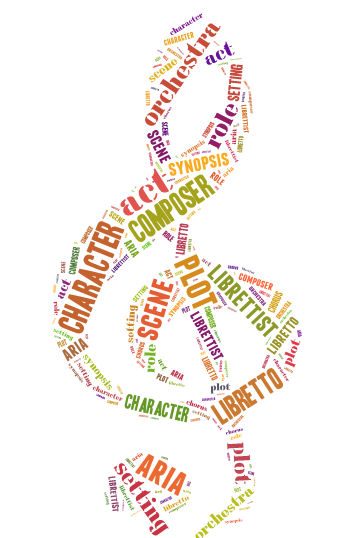
And these are the words and concepts included in the activity (created with Tagxedo):

miércoles, 13 de mayo de 2015

Opera Project

El proyecto final del curso PLE: Aprendizaje conectado en red (#PLE_INTEF), consiste en diseñar el PLE de apoyo a un proyecto del alumnado a partir de la construcción de un escritorio público con una serie de características.

No he tenido que esforzarme mucho ya que el siguiente Symbaloo estaba prácticamente hecho porque es el que hemos utilizado durante estos dos últimos años para el proyecto intercurricular (Literacy / Music) que hemos desarrollado en 2º ESO dentro del Programa Bilingüe del Centro (convenio MEC/British Council).

El fin último del proyecto es que el alumnado, en grupos de 4 ó 5, realice una presentación oral (con apoyo visual elaborado por ellos mismos) sobre una ópera del siglo XIX. Para realizar la exposición deben primero organizarse, buscar la información (a partir de los enlaces que se les ofrece en el Symbaloo), seleccionar la más relevante y preparar el soporte visual que van a utilizar. Todo lo que tienen que hacer está debidamente explicado en el documento que se les entrega al presentarles el proyecto (What's in an opera)

Durante las presentaciones de sus compañer@s deben cumplimentar la ficha individual que se les entrega (presentations for students) y, una vez finalizada cada presentación, evaluar el trabajo de sus compañer@s usando el documento Peer Assessment.

El profesorado cuenta con una rúbrica que el alumnado conoce antes de realizar las presentaciones y que también está disponible en el Symbaloo.

Para la actividad del curso he añadido un enlace a los marcadores sociales referidos a la ópera que tengo recogidos en Diigo y una suscripción RSS a contenidos relacionados con el tema (La opera - education news)

En el symbaloo se pueden encontrar, además, actividades relacionadas con el vocabulario relativo al tema, y que son trabajadas previamente en el aula, y enlaces a tutoriales de distintas herramientas y aplicaciones que pueden ser utilizadas para la presentación (Pixton, Thinglink, Prezi, Storyboard, Pearltrees, Symbaloo, Poplet y Powtoon)

http://edu.symbaloo.com/mix/whatsinanopera1

lunes, 20 de abril de 2015

Opera Project: Working on characters

We have used Monteverdi's Orfeo to ask students to work on one story's main characters, from both their appearance and their personality point of view.
Once they knew the plot, and before watching or listening to any extract of the favola in musica, they were asked to work in groups and describe Orfeo, Euridice, Charon and Hades using the adjectives that they considered most appropriate for each character.

These are the results:


Adjectives that describe personality
Adjectives that describe appearance

miércoles, 18 de marzo de 2015

Monteverdi's Orfeo

Our Opera Project goes on. We have been working on "the birth of opera" and on Monteverdi's Orfeo.
Even though Monteverdi often gets credit for inventing opera, the fact is that opera evolved amidst a community of Italian artists in the last years of the 16th century. Laura and Elisa used that fact on this amazing comic, created with PIXTON (click on the image to read the whole story)


lunes, 16 de marzo de 2015

The Red Violin

In 2ESO, we keep moving on in our trip through Music History. Today we have started watching The Red Violin but, before watching it, we have worked on these activities.


jueves, 5 de marzo de 2015

Jeopardy game: Musical instruments

Today we have used these jeopardy games -created on Super Teachers Tools- in order to review the contents related to Musical Instruments.

Do you feel like trying (click on the image)?

https://www.superteachertools.net/jeopardyx/jeopardy-review-game.php?gamefile=1393183469#.VPifTuGrOsN

On this one you will have to identify the instruments or to ask some questions related to the images: Jeopardy game, musical instruments (2)

Both activities are based on the contents you can find in the game created by the Carnegie Hall: Young Person's Guide to the Orchestra

sábado, 14 de febrero de 2015

What's in an opera, using the words in context

Once we have learnt the meaning of the different words related to the opera we used them in context through different listening activities.

We started watching and commenting this video from the Metropolitan Opera House, Met in Schools webpage (click here or on the image to open it):

http://link.brightcove.com/services/player/bcpid738927019001?bckey=AQ~~,AAAAjh5TC7k~,K2aUOQDXqSoshQuy5U8UTpU4wug0ASco&bctid=949304555001

lunes, 9 de febrero de 2015

Opera project, we have started working


Today we have been working on the basic vocabulary we will need for our presentations.
Here you can find the link to the document we have used.


domingo, 8 de febrero de 2015

Opera Project

A new edition of The Opera Project is about to start. Here you have the poster (created with Canva)

https://www.canva.com/design/DABICU3l3Es/2LKebwvoNXAcLv9Ff-NKVg/view?&utm_content=DABICU3l3Es&utm_campaign=designshare&utm_medium=link&utm_source=sharebutton&cc_from_uid=UABIByfU66U

On this video you can watch a summary of last year's edition:

Whats in an opera from Fran Música on Vimeo: This video shows the end of a whole process. What's in an Opera is a cross-curricular project in which English and Music teachers have worked together. 2 ESO students were given information and tools to organise and give a whole presentation about an specific opera. IES Emilio Alarcos, Bilingual project, May 2014.

lunes, 29 de diciembre de 2014

Renaissance Music Instruments

Match the Renaissance music instruments according to their families.
Use this link to find more information and to listen to some of the instruments: Education Scotland

Renaissance music instruments